Sardinia
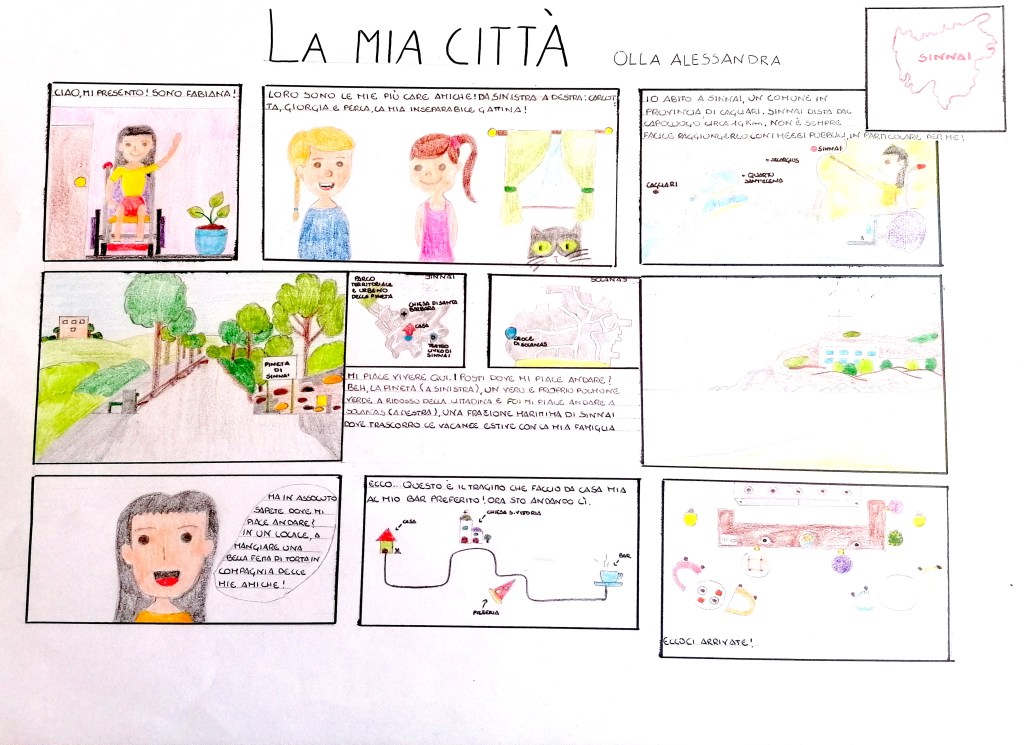
Our urban mosaic stretches out beyond Cagliari, as my students tell me about their wider lifeworlds, spaces and places that are meaningful to them. The Sardinia of the inside, made up of villages, memories and people making home in the dry but fertile lands. Federica speaks of Maracalagonis and village life, with culinary skills passed down the generations, connecting people to the land and to each other.

These traditions and objects live on beyond public spaces, in memories and photo albums that become starting places for sharing tales. Alessia’s grandmother gives meaning and life to the small things that are assembled to celebrate shared festivals and rituals, as small objects, food, ribbons and sweets are assembled and shared. Our places of memory are also made up of details and glances to which we can return, like stepping stones for sharing stories.

Alessandra reminds us that such objects are made by careful hands, using skills learnt and passed on through time, rooted in place. Clothes are more than shells to cover our bodies: they are objects shaped by memory, knowledge and care, stitching places together.

Serena’s world is equally enchanted, connecting past and present not only through objects but rather through sound, people and music. She reminds us that places are shaped by memories that speak to all our senses.

Some past lifeworlds are built from the memory of suffering or martyrdom, lives remembered and celebrated in place through ceremony. Veronica connects lights, colours, sounds, tastes and smells to conjure up a poly-sensorial landscape of memory. A place remade through festivals, as each generation soaks up and enjoys building community in place.

Claudia shares a tale rooted in Nuoro, connecting the threads of the past and present in a place built up by generations of careful people, but also constantly undergoing change. Sharing the stories of place in a visually rich collage of pertinent colours, she reminds us that beyond the shared memories, some places also become destinations in their own right for others, gaining meaning for passing visitors as well as grounding life and belonging for their inhabitants.

Further into the landscape, Sofia speaks to us of Burgei, at the end of a twisty road, and the meaning of home shaped not by sound but by the softness of fur and harshness of rocks. A landscape made up of memories, ancient buildings that haunt the living and practices of care that remain.

Ilaria’s world starts out equally filled with animals, non-human companions also making homes in the interior. But elsewhere beckons for some, for not everyone wants to build a life with furry companions in the countryside.

Alessandra reminds us that urban life takes place across the island, and not only in the main city of Cagliari. Her world may seem close on a map, but moving across the landscape and connecting cities isn’t always straightforward. But home is also build from connections with others close by, with time spent with companion animals and good food.
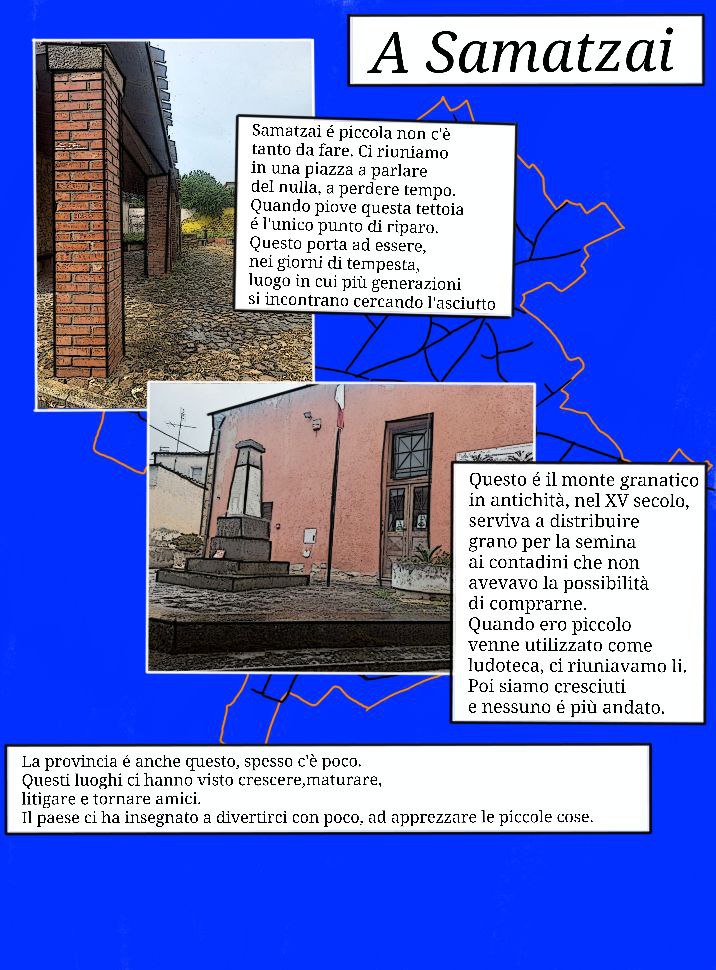
Sometimes the places we return too seem built on void, on absence, on little. Paolo tells us of Samatzai, a place in which to gather to speak about nothing much and yet, by sharing stories of it, the emptiness is filled with meaning. Often there seems to be little on the outside, but people build something together that creates a place on which to anchor lives and experiences.
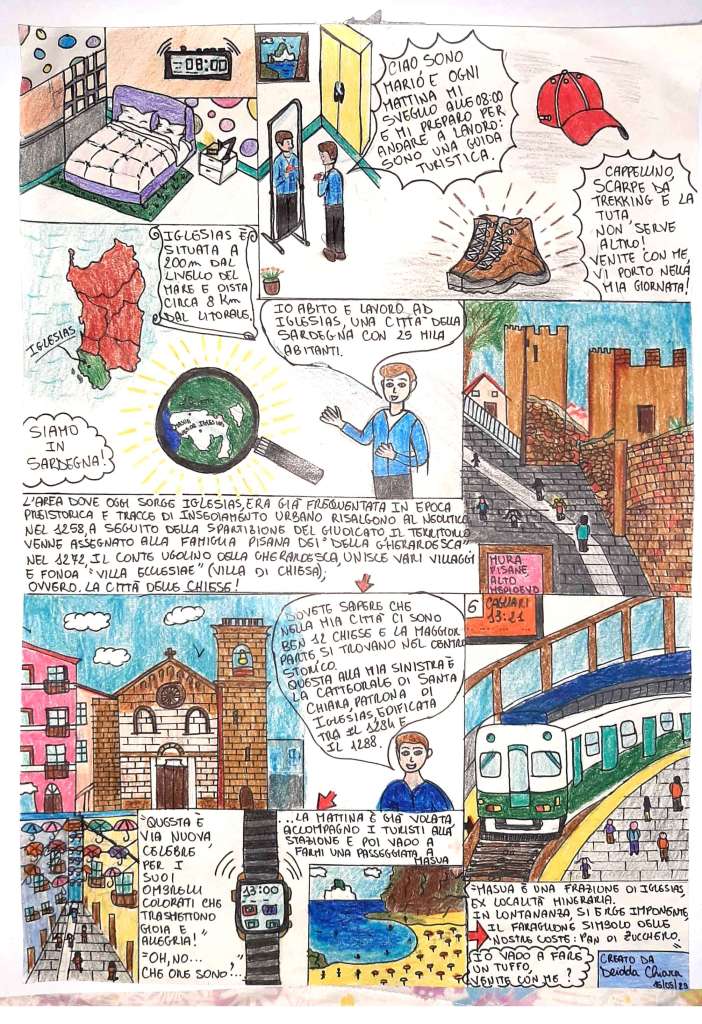
Outsiders need help in learning and making sense of new places. Chiara reminds us that some people are tasked with this, becoming guides to places, learning to speak and share the tales of places with others. From ancient rocks to modern connections, sharing geographical knowledge and making places come alive to visitors is a skill that relies not just on speech, but on bodies that get out of bed, dress and perform this role of ambassador to others.
Jacopo reminds us that being a guide and facilitating the encounter between place and outsider isn’t always straightforward, but relies on building up a personal knowledge of place before sharing this with others. Experiencing disorientation is also a first step towards building meaning that can be shared, and sometimes technology is not enough. Places also need to be encountered in the flesh.

Our mosaic kept growing the following year, as the 2024 students shared their visions and experience of their lives in the island of Sardinia. For these first-year students, being asked to draw geographical imaginaries did not come easily. Others embraced the exercise, and showed why their lives were filled with unique sense of place. Others drew people and places beyond their island, telling tales of travel and exploration, as thought their own home wasn’t worth narrating. I share here those who drew places special to them, in Sardinia, and who accepted to share these here.
Placefully using geographical scale, Sara showed us how places haunt our very bodies. Her home is part of her, and her eyes reflect something of this place. Her comic suggests that by listening to the stories of place told by others, we can perhaps experience them empathetically, understanding something both of the person and of the landscape.

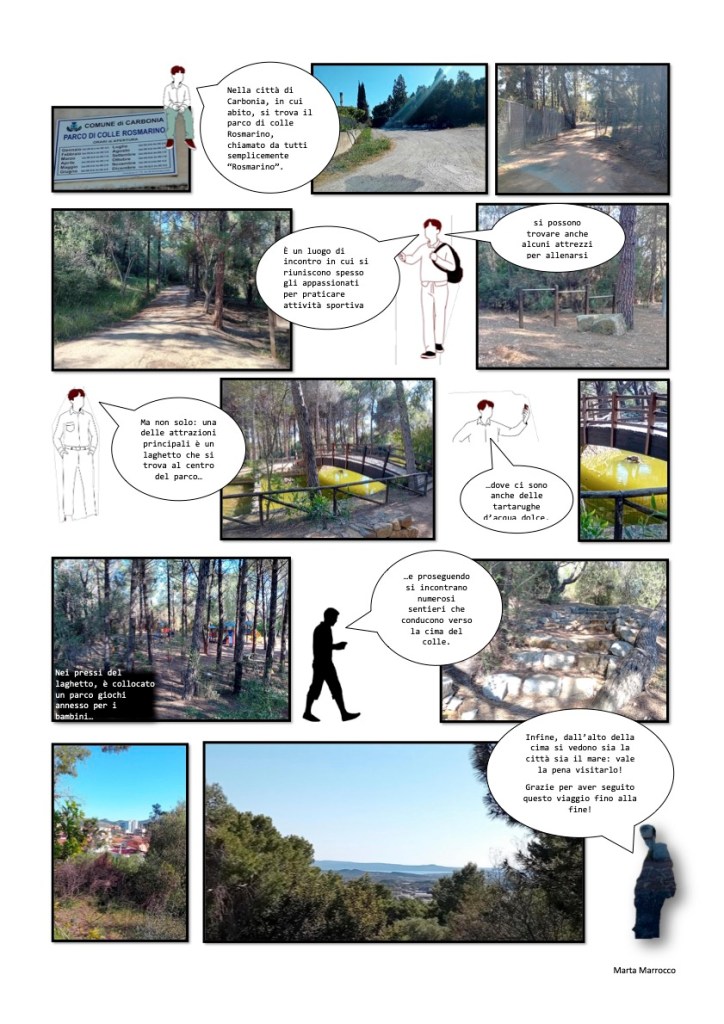
Marta also lived in Carbonia, and to focussed on one part of that broader map, telling the tale of a peaceful place: a small park filled with the odour of rosemary, traversed by cool water in the dry landscape.
Carbonia also featured in another Sara’s mind, telling tales of coal mining and galleries buried deep in the mountain. From the 1930s, until the mines’ closure, this industry shaped the land and the people. The ghosts of the tunnels still haunt the inhabitants, turned into sites of industrial heritage to be visited.

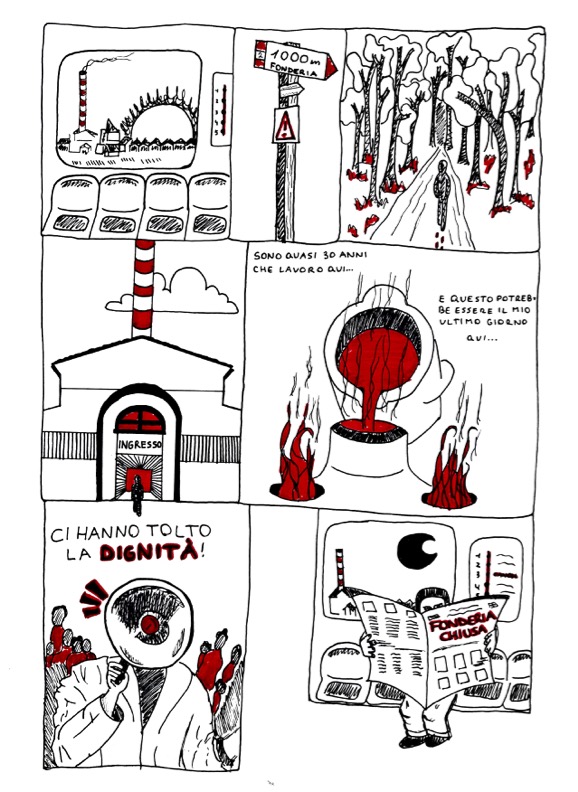
These tales of industrial change are not always so peaceful, and Giada’s beautiful portrayal fizzes with tension. Places and practices are often shot through with power, and such power is held unequally. Giada’s portrayal of factories closing, making clever use of a simple colour palette, shows this very effectively.
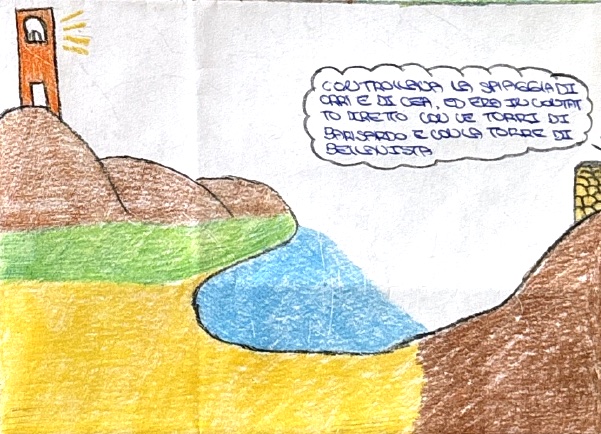
Reaching further back in time, one (anonymous) student focussed on one of the extraordinary medival towers that haunt the island, showing how this was built in 1587 to defend against pirates, yet now formed part of the landscape.
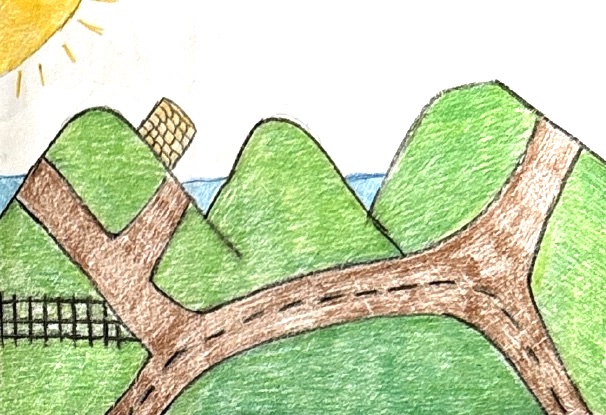
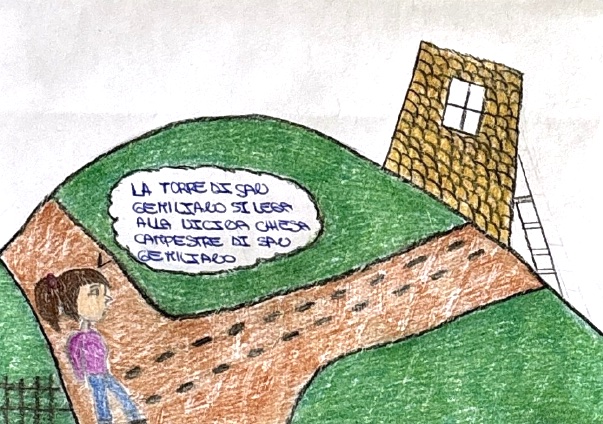
Echoing the structure of other towers in the landscape, speaking to church towers across the bay. Places as destinations for a walk and beacons in their own right.
Gaia wanted to speak about Ollola, in the Barbagia region, presenting it as a collage of places and events. Sometimes, when trying to tell stories, the usual voice of tourist brochures and lists takes over. We wish to tell our own stories, but common-place understandings haunt our narration. Yet even in these stories, the lives of people, practices and places seep out.
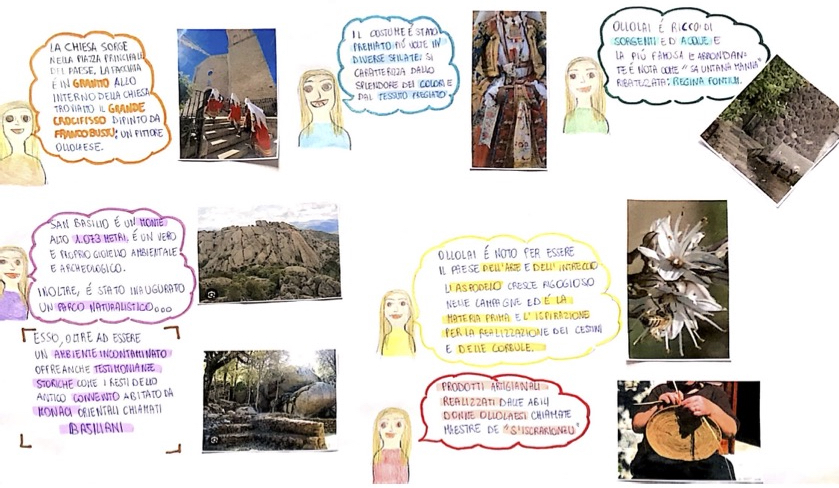
Places, people, and experiences narrated for others, represented visually. For these students, and for the others who handed in work but did not wish to share it, geography matters.
 Narrating Cities
Leave a comment