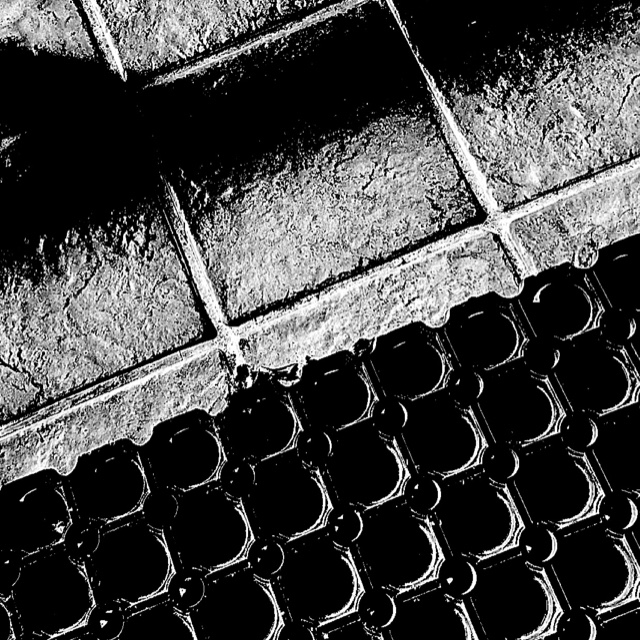

Our mosaic kept growing, as students shared their visions and experience of their lives in the island of Sardinia. For these first-year students, being asked to draw geographical imaginaries did not come easily. Others embraced the exercise, and showed why their lives were filled with unique sense of place. Others drew people and places beyond their island, telling tales of travel and exploration, as thought their own home wasn’t worth narrating. I share here those who drew places special to them, in Sardinia, and who accepted to share these here.
Placefully using geographical scale, Sara showed us how places haunt our very bodies. Her home is part of her, and her eyes reflect something of this place. Her comic suggests that by listening to the stories of place told by others, we can perhaps experience them empathetically, understanding something both of the person and of the landscape.

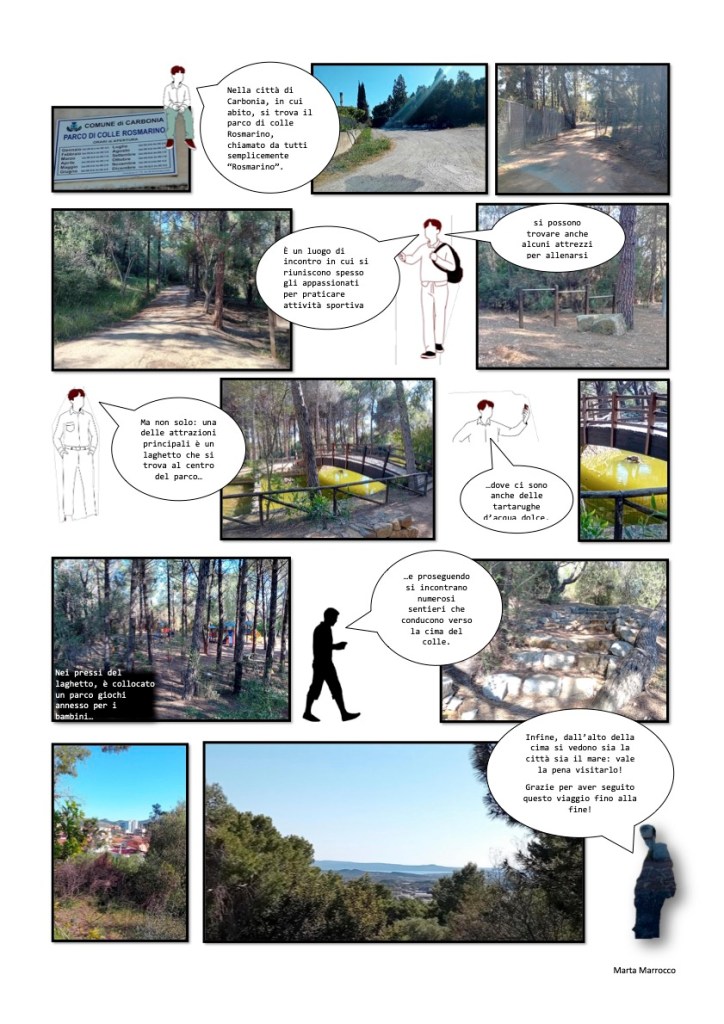
Marta also lived in Carbonia, and to focussed on one part of that broader map, telling the tale of a peaceful place: a small park filled with the odour of rosemary, traversed by cool water in the dry landscape.
Carbonia also featured in another Sara’s mind, telling tales of coal mining and galleries buried deep in the mountain. From the 1930s, until the mines’ closure, this industry shaped the land and the people. The ghosts of the tunnels still haunt the inhabitants, turned into sites of industrial heritage to be visited.

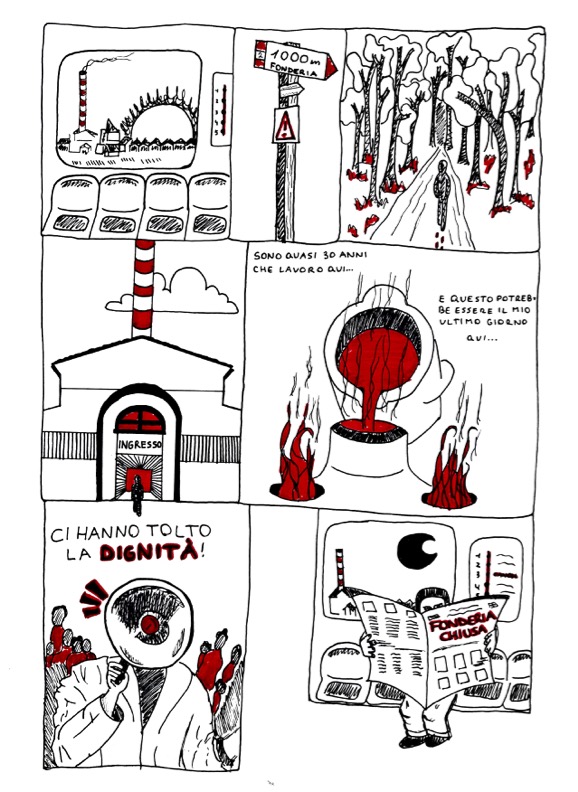
These tales of industrial change are not always so peaceful, and Giada’s beautiful portrayal fizzes with tension. Places and practices are often shot through with power, and such power is held unequally. Giada’s portrayal of factories closing, making clever use of a simple colour palette, shows this very effectively.
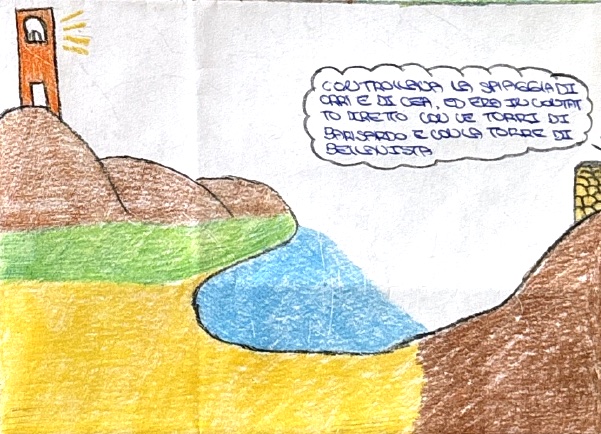
Reaching further back in time, one (anonymous) student focussed on one of the extraordinary medival towers that haunt the island, showing how this was built in 1587 to defend against pirates, yet now formed part of the landscape.
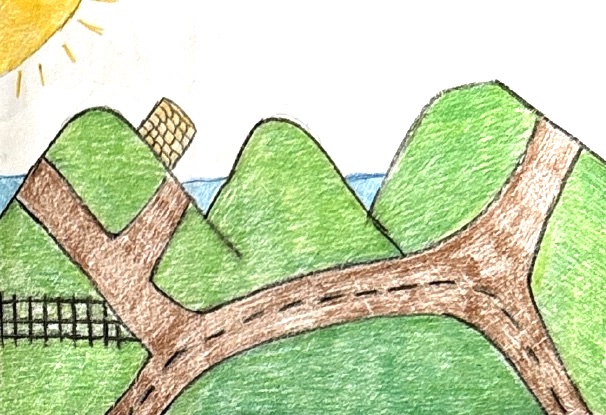
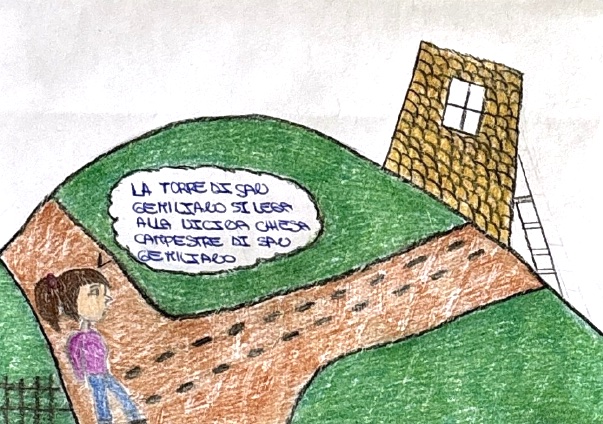
Echoing the structure of other towers in the landscape, speaking to church towers across the bay. Places as destinations for a walk and beacons in their own right.
Gaia wanted to speak about Ollola, in the Barbagia region, presenting it as a collage of places and events. Sometimes, when trying to tell stories, the usual voice of tourist brochures and lists takes over. We wish to tell our own stories, but common-place understandings haunt our narration. Yet even in these stories, the lives of people, practices and places seep out.
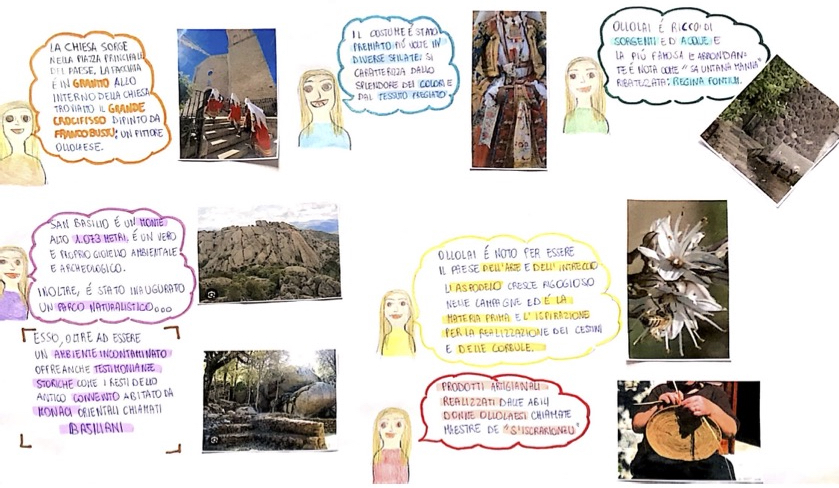
Places, people, and experiences narrated for others, represented visually. For these students, and for the others who handed in work but did not wish to share it, geography matters.
 Narrating Cities
Leave a comment